

Sciatica
Sciatica is a common condition causing pain along the sciatic nerve pathway. Apteum Spine provides comprehensive diagnostic and treatment options to address the root cause of your sciatic pain.
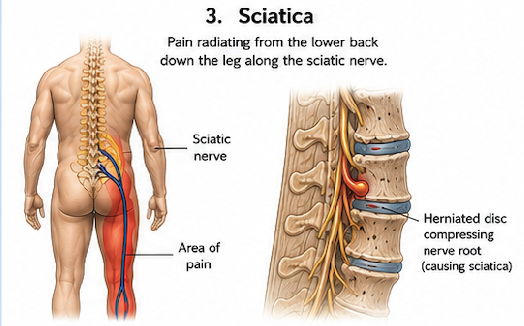
What Is Sciatica?
Sciatica refers to pain that radiates along the path of the sciatic nerve — the longest and thickest nerve in your body. It typically affects only one side of your body. Sciatica most commonly occurs when a herniated disc, bone spur, or spinal stenosis compresses part of the nerve, causing inflammation, pain, and often some numbness in the affected leg.
What Causes Sciatica?
The most common cause of sciatica is a herniated disc in the lumbar spine. Other causes include spinal stenosis (narrowing of the spinal canal), spondylolisthesis (a vertebra slipping forward), piriformis syndrome, and in rare cases, tumors or infections. Risk factors include age, obesity, prolonged sitting, diabetes, and occupations that require heavy lifting or twisting.
When Should You See a Doctor?
While mild sciatica usually goes away over time, you should seek medical attention if the pain is severe, doesn’t improve with self-care, or if you experience sudden, severe pain in your lower back or leg, numbness or muscle weakness in your leg, or difficulty controlling your bowels or bladder, which could indicate a serious condition called cauda equina syndrome.
Ready to Get Help?
Take the first step toward relief with a personalized consultation.
What Is Sciatica?
Sciatica refers to pain that travels along the path of the sciatic nerve — the longest nerve in the body — usually affecting one side of the body. It most often occurs when a herniated disc, bone spur, or narrowing of the spinal canal compresses part of the nerve, causing pain, inflammation, and sometimes numbness or weakness in the leg. At Apteum Spine, our focus is on finding the true cause of your sciatic pain, not just masking it, and treating it with the least invasive approach that works.
Common Symptoms
• Pain radiating from the lower back into the buttock and down the leg
• Sharp, burning, or electric shock–like pain
• Numbness or tingling in the leg or foot
• Weakness in the affected leg
• Pain that worsens with prolonged sitting
Treatment Options
We start conservative whenever appropriate and escalate only as needed:
• Physical therapy and targeted stretching
• Anti-inflammatory and pain medications
• Epidural steroid injections or nerve blocks
• Minimally invasive microdiscectomy or decompression when conservative care hasn’t worked
Surgery is recommended only when it is truly necessary — and when it is, the goal is precision, minimal tissue disruption, and a faster recovery.
What Causes Sciatica?
The most common cause is a herniated lumbar disc. Other causes include spinal stenosis (narrowing of the spinal canal), spondylolisthesis (a vertebra slipping forward), and degenerative disc disease. Risk factors include age, prolonged sitting, excess weight, diabetes, and jobs involving heavy lifting or twisting.
When to See a Doctor
Mild sciatica often eases with time and self-care. Seek prompt evaluation if pain is severe, doesn’t improve, follows an injury, or comes with progressive numbness or leg weakness. Seek emergency care for sudden, severe weakness or loss of bladder or bowel control, which can signal a serious condition called cauda equina syndrome.
Frequently Asked Questions
How long does sciatica last?
Many cases improve within a few weeks with conservative care. Pain that persists beyond 6–8 weeks, or that worsens, warrants evaluation.
Will I need surgery for sciatica?
Most people don’t. Surgery is considered when there is nerve compression with persistent pain or weakness that hasn’t responded to conservative treatment.
Can sciatica cause permanent damage?
Most cases resolve without lasting harm, but significant or worsening weakness or numbness should be evaluated promptly.
Medically reviewed by Louis G. Cornacchia III, M.D., FAANS, FACS — board-certified neurosurgeon. Last updated: June 2026. This page is for general education and is not a substitute for medical advice. For urgent symptoms, call (609) 831-0998 or go to the nearest emergency room.