

Spine surgery.
Guided by experience.
A careful evaluation of your condition. A clear explanation of your options. Experienced surgical care when appropriate.
Louis G. Cornacchia III, M.D., FAANS, FACSNeurosurgeon · Founder, Apteum SpineExplore his training and experience
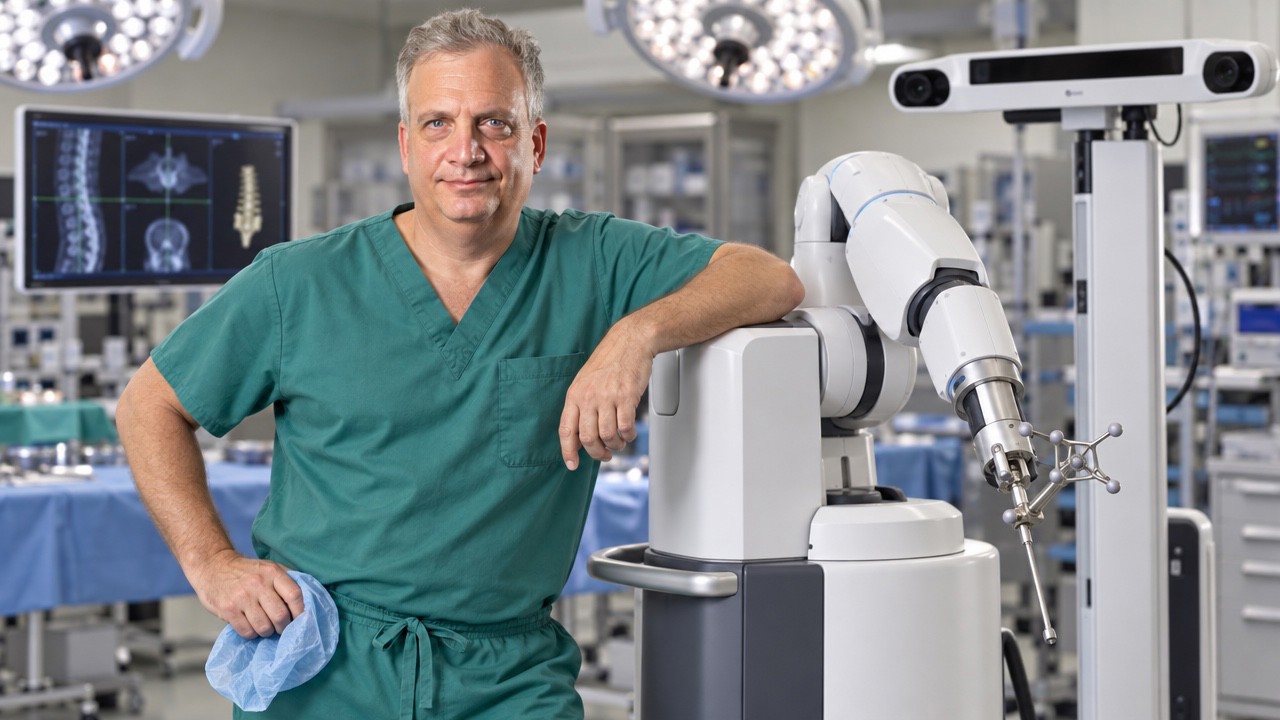
“Great spine care begins with listening—and the humility to recognize that every patient has something to teach us.”
- 30+ yearsof spine surgery experience
- 8 yearsperforming robotic TLIF
- Over 500robotic TLIF procedures
Robotic TLIF at Apteum Spine
Robotic lumbar fusion.
Backed by experience.
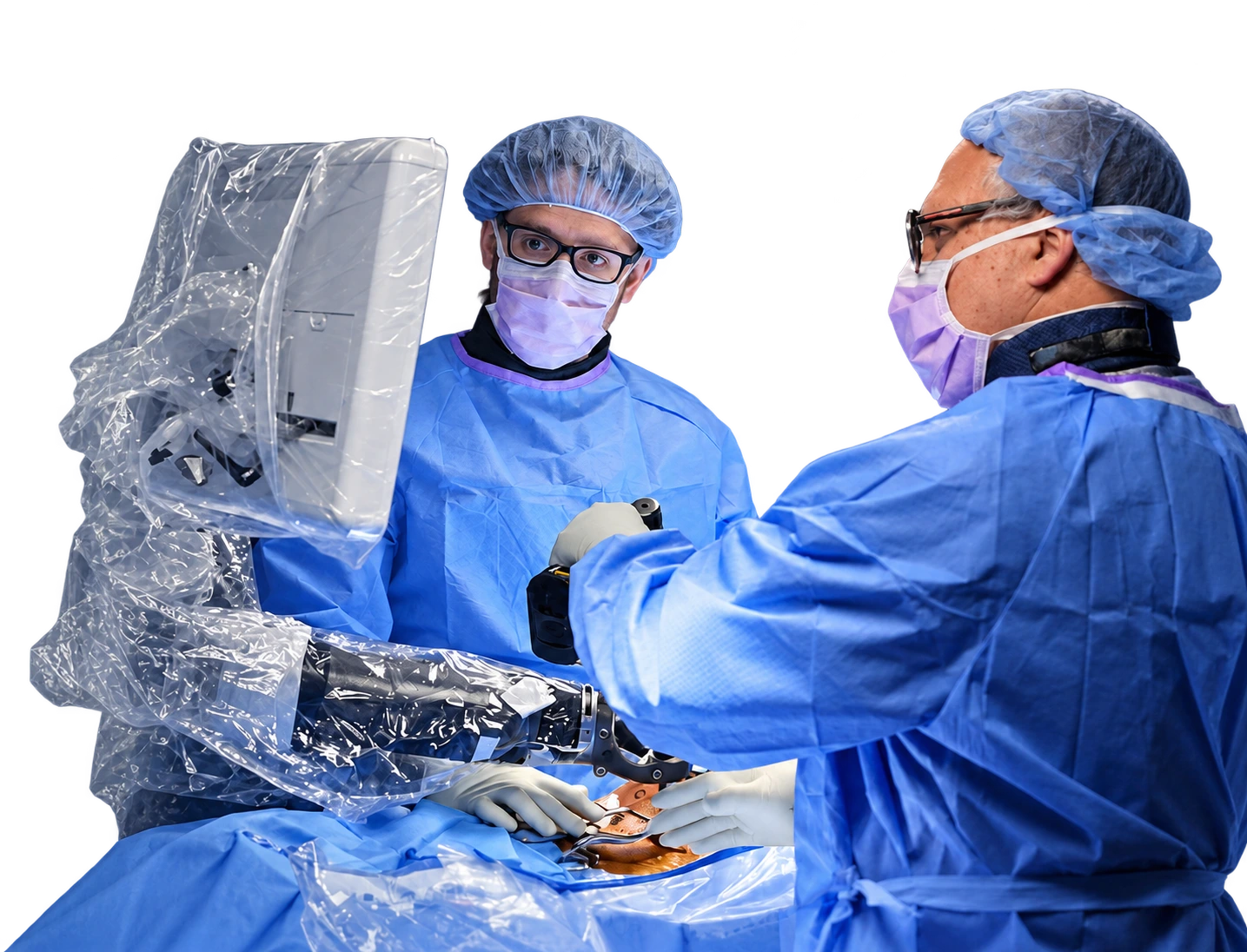
TLIF (transforaminal lumbar interbody fusion) is a type of lower-back fusion surgery. Dr. Cornacchia now uses robotic assistance in every TLIF he performs.
Patient education · 2 minutes 28 seconds
Dr. Cornacchia explains spondylolisthesis, nerve compression, the goals of TLIF, and the role of surgeon-controlled robotic guidance.
PRECISION SPINE WITH DR. CORNACCHIA
From CT planning to robotic guidance
Careful planning. Robotic guidance. Experienced judgment.
“In my experience, robot-assisted TLIF represents the most significant advance in lumbar fusion since the introduction of pedicle screw fixation.
Robotics is a tool. But in experienced hands, it is like equipping a master craftsman with a three-dimensional blueprint and computer-guided instruments. The surgeon brings the judgment, develops the plan, and performs the operation. Robotic guidance helps translate that plan into precise, repeatable instrument positioning.”
Dr. Cornacchia explains how he adjusts a pedicle screw’s three-dimensional position and how robotic guidance helps reproduce the plan, seeking strong fixation while preserving nearby structures.
In Dr. Cornacchia’s practice
Robotic TLIF: surgery and early recovery
In his practice, patients commonly begin walking within hours of surgery, with assistance as needed. Discharge the same day or the following morning is now routine for appropriately selected patients.
Your discharge timing depends on your procedure, overall health, and recovery. Your care team confirms when you are ready to go home.
Low blood loss
Studies comparing robot-assisted minimally invasive TLIF with traditional open TLIF have reported lower blood loss.
In Dr. Cornacchia’s experience, estimated blood loss during a typical two-level robotic TLIF is approximately 25 mL. He reports no transfusions to date in his robotic TLIF cases.
Reduced X-ray exposure during surgery
Robotic guidance can reduce intraoperative X-ray exposure compared with conventional fluoroscopy-guided minimally invasive lumbar fusion.
In Dr. Cornacchia’s practice, a typical two-level robotic TLIF uses four to six intraoperative X-ray images, plus a separate CT scan before surgery for planning.
Practice figures reflect Dr. Cornacchia’s reported experience and can vary by case. Total radiation exposure also includes the planning CT.
Learn more about TLIF and robotic TLIFA more personal approach
Time to listen.
Clarity to decide.
At Apteum Spine, neurosurgeon Dr. Louis G. Cornacchia III leads your spine evaluation and surgical care. When other treatment is appropriate, care is coordinated through TSCN collaborating specialists.
We believe in patient advocacy and empowerment. You become an active participant in your treatment plan. We take the time to listen to your concerns, answer your questions, and explain your condition and the available treatment options.
No one can evaluate a patient in a 10-minute session. We take time to get to know each patient. Together, we develop a personalized care plan tailored to your unique needs, ensuring that you are an informed decision-maker throughout the process.
Core services
Expertise.
With careful
judgment.
Most patients are rushed into decisions or given unclear answers. We take the time to determine the correct diagnosis and the right treatment—surgical or not.
You will not be rushed through a 10- or 20-minute evaluation here.
Spine Surgery
Advanced surgical interventions for complex spinal conditions.
Robotic Spine Surgery
Robotic guidance for lumbar fusion, supported by extensive robotic TLIF experience.
Pain Management
Comprehensive strategies to manage and alleviate chronic back and neck pain.
Revision Surgery
Expert care for patients requiring follow-up or corrective spinal procedures.
Second Opinions
Thorough evaluations to confirm diagnoses and explore all treatment options.
Why patients choose Apteum Spine
Experience matters.
So does the time
we give you.
Most patients with spine problems are overwhelmed by conflicting opinions, rushed consultations, and uncertainty about what to do next. At Apteum Spine, we believe patients deserve careful evaluation, honest recommendations, and enough time to truly understand their condition before making major decisions.
Spine Surgery — Only When Truly Necessary.
Most patients with spine problems are overwhelmed by conflicting opinions, rushed consultations, and uncertainty about what to do next. At Apteum Spine, we believe patients deserve careful evaluation, honest recommendations, and enough time to truly understand their condition before making major decisions.
Experienced Evaluation Matters
Dr. Cornacchia has more than 30 years of experience treating complex spine conditions, including minimally invasive and robotic-assisted spine surgery. Every patient is evaluated individually, with attention to imaging, symptoms, neurological findings, prior treatment history, and long-term outcomes.
Not every patient needs surgery. Not every spine problem has a simple answer.
Surgery Only When It Is Truly Necessary
Many patients come to Apteum Spine after being told they need surgery immediately — or after being told nothing can be done.
We believe thoughtful surgical judgment matters.
Whenever possible, conservative treatment options are considered first. When surgery is appropriate, the focus is on precision, safety, minimizing tissue disruption, and improving long-term function and quality of life.
Complex and Revision Spine Cases
Apteum Spine frequently evaluates patients with failed prior spine surgery, persistent pain after treatment, complex spinal instability, severe nerve compression, difficult diagnostic problems, traumatic injuries, and work-related and personal injury cases.
Complex spine problems often require more than a brief office visit or a generic treatment plan.
Robotic and Minimally Invasive Expertise
Dr. Cornacchia has 8 years of experience performing robotic TLIF and has completed over 500 robotic TLIF procedures. He now uses robotic assistance in every TLIF he performs. Learn about his approach to lumbar fusion.
Technology alone does not create good outcomes. Experience, judgment, and careful patient selection remain essential.
A More Personal Approach to Spine Care
Patients are not numbers or appointment slots.
At Apteum Spine, we believe patients deserve time, explanation, careful listening, honest communication, and coordinated care.
Our mission is to help patients make informed decisions with clarity and confidence.
Conditions treated
Understand your
spine condition.
Expert diagnosis and treatment for a wide range of spinal issues.
View all conditions ↗Care after injury
Spine care after
auto accidents.
Specialized care for injuries sustained in motor vehicle accidents. We provide comprehensive support from initial assessment to final recovery.
- Detailed Evaluation
- Complete Documentation
- Personalized Treatment

What we offer
Specialist surgery.
Coordinated care.
Your care begins with a neurosurgical evaluation of your symptoms, imaging, neurological findings, and prior treatment. Dr. Cornacchia helps you understand whether surgery is appropriate. Surgical care is led by Apteum Spine; other treatments are coordinated through TSCN collaborating specialists.
Spine surgery at Apteum
- Cervical (neck) spine surgery
- Thoracic (mid-back) spine surgery
- Lumbar (lower back) spine surgery
- Sacral spine surgery
Including minimally invasive and robotic-assisted (ExcelsiusGPS) surgery, revision and failed-back surgery, and independent second opinions.
Other treatments through TSCN
For everything beyond surgery, your care is coordinated through the Tri-State Specialized Care Network (TSCN).
- Pain management and spinal injections
- Physical therapy and rehabilitation
- Chiropractic care
- Diagnostic imaging (MRI / CT)
Offered through TSCN collaborating doctors.
From Dr. Cornacchia
Spine surgery
is a journey.

Louis G. Cornacchia III, M.D., FAANS, FACS
“I see every patient as someone whose life I may be able to substantially improve.
The process cannot be a snapshot. Too much is lost without a thorough understanding of the patient—and without helping the patient understand what I see.
Spine surgery is a journey. If we do not shortchange the exploration and evaluation stage, the result can be truly remarkable for the patient.
The final step—actually performing the surgery—can now be done with a level of repeatable precision that was never possible before, particularly with the use of modern surgical robotics.”
Your next step
Ready to start your
journey to recovery?
Request an appointment or call our 24/7 intake line.