

Neck or arm symptoms?
Understand your next step.
Review your symptoms, imaging and treatment history before deciding whether ACDF or another treatment fits your diagnosis.
Request an ACDF Evaluation (Form)Telehealth or in person. Your request does not confirm an appointment.
A careful review before a surgical decision.
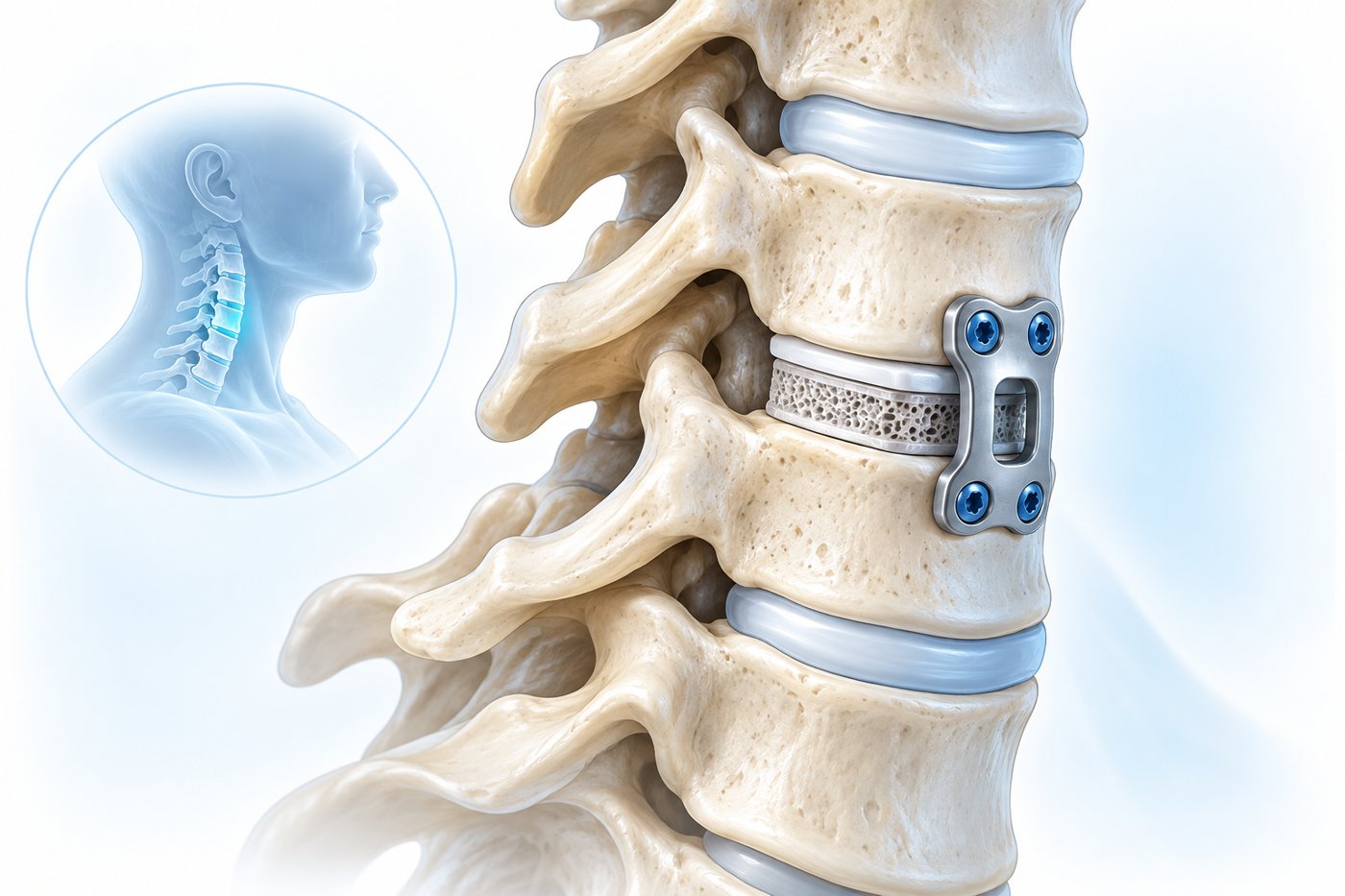
ACDF removes a damaged cervical disc from the front of the neck, decompresses affected nerves or the spinal cord, and stabilizes the treated segment. The first step is confirming whether your symptoms match the imaging.
Bring your imaging
Bring available cervical MRI, CT, X-rays and prior operative reports.
Discuss the alternatives
Review previous care, nonsurgical options, expected benefits, limitations and risks.
Choose the appropriate next step
Surgery is discussed when symptoms, examination and imaging support it. No outcome is guaranteed.

Experience & careful judgment
Meet Dr. Cornacchia.
Louis G. Cornacchia III, M.D., FAANS, FACS
A board-certified neurosurgeon with 30 years of experience and thousands of spine surgeries performed. Every patient is evaluated as a unique presentation worthy of careful study.
Experience applied to ACDF
For ACDF consultations, Dr. Cornacchia brings that experience to a careful review of your neck and arm symptoms, examination, and cervical imaging. Each recommendation is based on your individual presentation, with time to discuss whether ACDF fits your needs and what alternatives deserve consideration.
More about Dr. Cornacchia’s experience and SCS device decisions
Spinal cord stimulation experience
Experienced neurosurgical judgment before device decisions.
A spinal cord stimulator is a medical device decision, but it is also a diagnosis decision. Apteum’s evaluation is designed to clarify whether SCS is reasonable, whether another spine problem needs attention, and what goals should define success for you.
He works with a community of experienced pain-management doctors and with Medtronic, Boston Scientific, and other manufacturers.
Manufacturer relationships do not imply endorsement of a specific device for every patient. Brand and system selection should be based on clinical need, anatomy, MRI considerations, programming goals, prior device history, and shared decision-making.

 Additional systems as clinically appropriate
A neurosurgeon who evaluates cervical disc herniation, cervical stenosis, radiculopathy and spinal cord compression. Your consultation focuses on understanding your symptoms and choosing an appropriate treatment path.
Your evaluation focuses on your diagnosis, prior care and goals. Discuss the expected benefits, limitations, risks and alternatives before choosing your next step. An evaluation is not a commitment to surgery or an implant.
Read Dr. Cornacchia’s training and experience →How spinal cord stimulation works
Watch this explanation created by Dr. Cornacchia. Spinal cord stimulation is one option for selected patients after evaluation; it is not appropriate for every cause of pain and does not replace the discussion of the treatment on this page.
Full ACDF evaluation, treatment, recovery, risks and FAQs
ACDF Surgery Evaluation
Neck pain, arm pain, numbness, tingling or weakness can come from pressure on a cervical nerve or the spinal cord.
ACDF is a cervical spine operation designed to remove a damaged disc from the front of the neck, decompress the affected nerves or spinal cord, and stabilize the segment with a cage or graft and fixation when appropriate.
At Apteum Spine, the decision starts with diagnosis: symptoms, neurologic exam, imaging, nonsurgical options and a careful discussion of expected benefits and risks.
Our team will contact you to discuss your request and arrange the next step. Your request does not confirm an appointment.
COORDINATED CERVICAL SPINE CARE
A diagnosis-first path before deciding on neck surgery.
ACDF can be very helpful for the right structural problem, but not every neck or arm pain pattern needs an operation. Apteum’s evaluation focuses on listening, reviewing imaging carefully and matching treatment to the actual pain generator.
Symptoms matched to anatomy
Arm pain, numbness, tingling, weakness, balance changes and neck pain are reviewed alongside cervical imaging and exam findings.
Nonsurgical care considered first
When safe and appropriate, treatment may begin with therapy, medications, injections, activity changes or continued observation.
Surgery only when it fits
ACDF is discussed when disc herniation, bone spurs or stenosis create nerve or spinal cord compression that aligns with your condition and goals.
When cervical symptoms need a spine evaluation.
ACDF is most often considered for cervical nerve compression or spinal cord compression caused by a disc herniation, degenerative disc disease, bone spurs or cervical stenosis. The first step is confirming whether the symptoms truly match the imaging.
Symptoms that may prompt evaluation
- Arm pain or radiating pain. Pain traveling from the neck into the shoulder, arm or hand may suggest cervical radiculopathy.
- Numbness or tingling. Sensory changes in the arm, hand or fingers can occur when a nerve root is irritated or compressed.
- Weakness. Trouble lifting the arm, gripping, writing or using the hand can indicate nerve involvement and should be assessed.
- Balance or coordination changes. Hand clumsiness, gait changes or falls may suggest spinal cord compression and need prompt evaluation.
Imaging and clinical correlation
MRI is commonly used to evaluate disc herniation, nerve compression, spinal cord compression and stenosis. X-rays may help assess alignment and motion. CT may be useful for bone detail or prior surgery planning.
Imaging findings alone do not automatically mean surgery is needed. The decision depends on whether the imaging, neurologic examination and symptom pattern point to the same problem.
From conservative care to ACDF surgical planning.
The treatment path should be individualized. Some patients improve without surgery, while others need decompression because nerve or spinal cord compression is severe, progressive or not improving with appropriate nonsurgical treatment.
Nonsurgical alternatives
Depending on the diagnosis, options may include physical therapy, posture and activity changes, anti-inflammatory or nerve-pain medications, cervical traction in selected cases, epidural steroid injections or time for natural improvement.
When surgery is discussed
ACDF may be considered when symptoms persist despite appropriate care, imaging confirms compression, pain is disabling, weakness is present, or spinal cord compression raises concern for cervical myelopathy.
What ACDF is designed to do
The operation removes the damaged disc and compressive material from the front of the neck, relieves pressure on the nerve roots or spinal cord and stabilizes the treated level while fusion develops.
Your ACDF treatment pathway
A careful decision at each stage, with the surgical plan tailored to your diagnosis and anatomy.
- 1
Clarify the diagnosis
Review symptoms, neurologic examination, cervical MRI or other imaging and prior treatment to determine the pain generator and neurologic risk.
- 2
Consider nonsurgical treatment
If there is no urgent neurologic concern, nonsurgical care may be recommended first or continued when it is helping and clinically appropriate.
- 3
Plan the ACDF level and approach
The surgeon identifies the exact cervical level or levels, reviews anatomy, discusses alternatives and explains the reason for an anterior approach.
- 4
Remove the disc and decompress
Through the front of the neck, the damaged disc and compressive material are removed to relieve pressure on the affected nerve roots or spinal cord.
- 5
Place cage or graft and fixation
A spacer, cage or bone graft is placed to support the disc space. A plate, screws or integrated fixation may be used to hold the segment stable while fusion develops.
- 6
Recover and monitor fusion
Follow-up focuses on wound healing, swallowing or voice symptoms, activity precautions, neurologic recovery, X-ray monitoring and gradual return to appropriate activity.
If ACDF is not the right fit
The plan may shift to continued nonsurgical care, pain management, a different cervical procedure, second opinion review or monitoring depending on the diagnosis.
The details of ACDF vary by patient, level, anatomy, bone quality, prior surgery, medical history and surgeon judgment. This page is educational and is not a substitute for individualized medical advice.
Need help deciding whether ACDF fits your diagnosis?
Request an evaluation so Apteum can review your symptoms, imaging, goals and prior treatment history.
What ACDF can — and cannot — be expected to do.
ACDF is intended to decompress nerves or the spinal cord and stabilize the treated level. It is not a general cure for every source of neck pain, headache, muscle pain or degenerative change.
Reasonable goals of ACDF
- Relieve pressure on a compressed cervical nerve root or the spinal cord.
- Reduce arm pain or neurologic symptoms when they match the compressed level.
- Stabilize the operated segment after disc removal.
- Protect neurologic function when spinal cord compression is clinically significant.
Limits and uncertainty
ACDF may not resolve pain from arthritis outside the treated level, muscle spasm, shoulder disease, peripheral nerve problems, chronic pain syndromes or unrelated causes.
Some patients have residual numbness, weakness, swallowing discomfort, voice changes or neck stiffness. Individual recovery depends on diagnosis, health, smoking status, bone healing and the condition of the nerves before surgery.
View recovery expectations and surgical risks
Early healing
Many patients need a period of activity restriction, incision care and gradual return to walking and daily activity. Some patients experience sore throat, swallowing discomfort or neck soreness early after surgery.
Bone healing over time
Follow-up imaging may be used to monitor alignment, hardware and fusion progress. Smoking, certain medical conditions and some medications can affect bone healing.
Nerve recovery varies
Pain, numbness, tingling and weakness may recover at different speeds. Longstanding or severe compression may leave residual symptoms even after adequate decompression.
Risks to discuss
Risks can include infection, bleeding, nerve or spinal cord injury, swallowing difficulty, voice changes, nonunion, hardware problems, adjacent-level degeneration, persistent pain, need for additional surgery and anesthesia-related risks.
This risk list is not exhaustive. Your individual risk depends on your anatomy, diagnosis, medical history, medications, bone health, prior surgery and the planned number of levels.
Neurosurgical judgment before a fusion decision.
A fusion decision should not be rushed. Apteum’s approach emphasizes a clear diagnosis, careful imaging review, conservative care when appropriate and a surgical plan only when the expected benefit justifies the risk.
Request a telehealth or in-person ACDF consultation.
If cervical disc herniation, stenosis, arm pain, numbness, weakness or spinal cord compression is affecting your life, Apteum can help you understand whether ACDF should be considered.
Prepare for your visit
For the most useful evaluation, bring or upload cervical MRI or CT images, radiology reports, X-rays, prior operative notes, injection records, medication lists and a summary of treatments already tried.
Our team will contact you to discuss your request and arrange the next step. Your request does not confirm an appointment.
Contact
ACDF Surgery FAQ
ACDF is also described as cervical discectomy and fusion. An ACDF surgeon evaluation helps determine whether this procedure fits your diagnosis.
What does ACDF stand for?
Who may be a candidate for ACDF?
Do I need surgery for a herniated cervical disc?
What nonsurgical treatments may be tried before ACDF?
What happens during ACDF surgery?
How long does recovery take after ACDF?
What are the risks of ACDF?
Can ACDF treat all neck pain?
Patient information: AAOS cervical surgery guide · Related service: cervical spine surgery · Learn about herniated discs · Request a spine surgery second opinion
Find out whether ACDF fits your diagnosis.
Request an evaluation to review your symptoms, imaging, goals and prior treatment history.
The team will contact you to discuss your request. No outcome is guaranteed.