

Leg pain when you walk?
Understand your options.
Spinal stenosis is narrowing within the spine that can put pressure on nerves or the spinal cord. Review your symptoms, imaging and treatment options.
Request a Stenosis Evaluation (Form)Telehealth or in person. Your request does not confirm an appointment.
A careful review before a surgical decision.
Your evaluation reviews symptoms, a neurological examination and imaging to understand how spinal narrowing is affecting you. Treatment is matched to your situation, with nonsurgical and surgical options discussed when appropriate.
Bring your imaging
Bring available spine MRI or CT images, reports and details of previous treatment.
Discuss the alternatives
Review previous care, nonsurgical options, expected benefits, limitations and risks.
Choose the appropriate next step
Surgery is discussed when symptoms, examination and imaging support it. No outcome is guaranteed.

Experience & careful judgment
Meet Dr. Cornacchia.
Louis G. Cornacchia III, M.D., FAANS, FACS
A board-certified neurosurgeon with 30 years of spinal cord stimulation experience.
More about Dr. Cornacchia’s experience and SCS device decisions
Spinal cord stimulation experience
Experienced neurosurgical judgment before device decisions.
A spinal cord stimulator is a medical device decision, but it is also a diagnosis decision. Apteum’s evaluation is designed to clarify whether SCS is reasonable, whether another spine problem needs attention, and what goals should define success for you.
He works with a community of experienced pain-management doctors and with Medtronic, Boston Scientific, and other manufacturers.
Manufacturer relationships do not imply endorsement of a specific device for every patient. Brand and system selection should be based on clinical need, anatomy, MRI considerations, programming goals, prior device history, and shared decision-making.

 Additional systems as clinically appropriate
Your evaluation focuses on listening, reviewing your imaging and explaining which options deserve consideration. Surgery is considered when it is appropriate for your case.
Your evaluation focuses on your diagnosis, prior care and goals. Discuss the expected benefits, limitations, risks and alternatives before choosing your next step. An evaluation is not a commitment to surgery or an implant.
Read Dr. Cornacchia’s training and experience →How spinal cord stimulation works
Watch this explanation created by Dr. Cornacchia. Spinal cord stimulation is one option for selected patients after evaluation; it is not appropriate for every cause of pain and does not replace the discussion of the treatment on this page.
Full spinal stenosis information, treatment and FAQs
Spinal Stenosis
Spinal stenosis can significantly impact your quality of life. At Apteum Spine, we specialize in advanced diagnostic techniques and minimally invasive treatments to relieve the pressure on your spinal nerves.
Your request does not confirm an appointment.
Understand your condition. Know your options.
The first step is understanding what is causing your symptoms. We review your history, imaging, and previous treatment so you can understand which options deserve consideration.
- Listen
Your history, symptoms, and goals.
- Review
Your imaging and previous treatment.
- Explain
Your options and the next steps.
Information for your evaluation
What Is Spinal Stenosis?
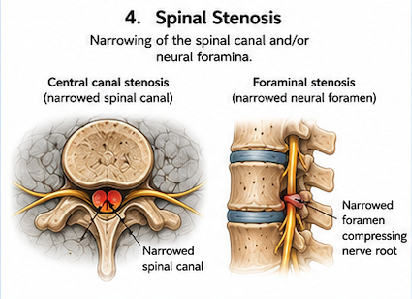
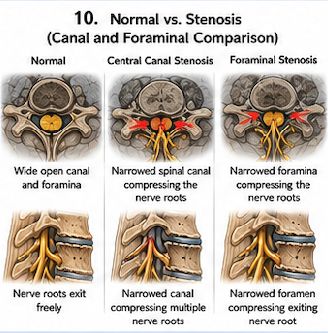
Spinal stenosis is a condition in which the spinal canal narrows, reducing the space available for the spinal cord and nerves. This narrowing can put pressure on the spinal cord and nerve roots, leading to pain, numbness, and weakness. It most commonly occurs in the lumbar (lower back) and cervical (neck) regions of the spine.
What Causes Spinal Stenosis?
The most common cause of spinal stenosis is osteoarthritis-related wear and tear on the spine. As the cartilage that cushions the joints breaks down, the body may produce bone spurs that grow into the spinal canal. Other causes include herniated discs, thickened ligaments, spinal injuries, tumors, and congenital spinal canal narrowing.
How Does Spinal Stenosis Progress?
Spinal stenosis typically develops gradually over time. Some people with spinal stenosis may have no symptoms, while others experience increasing pain and disability. Without treatment, the condition can worsen, leading to chronic pain, balance problems, incontinence, and in severe cases, paralysis.
Common Symptoms
- Numbness or tingling in hands, arms, feet, or legs
- Weakness in a hand, arm, foot, or leg
- Problems with walking and balance
- Pain or cramping in legs when standing or walking
- Back pain that eases when leaning forward or sitting
Treatment Options
- Physical therapy and exercise programs
- Epidural steroid injections
- Medication management for pain and inflammation
- Laminectomy or laminoplasty
- Minimally invasive robotic spinal decompression
What Is Spinal Stenosis?
Spinal stenosis is a narrowing of the spaces within your spine that can put pressure on the spinal cord and nerves — most often in the lower back or neck. It tends to develop gradually with age. At Apteum Spine, we evaluate how much the narrowing is actually affecting you and match treatment to your symptoms, not just the scan.
Symptoms
• Leg pain, heaviness, or cramping that worsens with standing or walking and eases when sitting or leaning forward (neurogenic claudication)
• Numbness, tingling, or weakness in the legs or arms
• Neck or lower back pain
• In severe cases, balance or bowel/bladder changes (seek prompt care)
Treatment Options
• Physical therapy and activity modification
• Anti-inflammatory medication and epidural injections
• Minimally invasive surgery when conservative care fails and there is a clear, correctable cause
• Decompression with stabilization only when instability is present
Causes
Most stenosis is degenerative — from arthritis, thickened ligaments, bone spurs, or bulging discs narrowing the canal over time. It can also stem from prior injury or be congenital.
Diagnosis
Evaluation includes your history, a neurological exam, and MRI or CT imaging to confirm the level and severity of narrowing.
Frequently Asked Questions
Does spinal stenosis always get worse?
It often progresses slowly, but many people manage symptoms for years without surgery.
Is walking good for stenosis?
Staying active generally helps; we tailor specific recommendations to your case and comfort.
Medically reviewed by Louis G. Cornacchia III, M.D., FAANS, FACS — board-certified neurosurgeon. Last updated: June 2026. This page is for general education and is not a substitute for medical advice. For urgent symptoms, call (609) 831-0998 or go to the nearest emergency room.
Take your next step with clarity.
Request an evaluation of your condition and options. Our team will contact you to discuss your request and arrange the next step.
Your request does not confirm an appointment.
Review your spinal stenosis treatment options.
Request an evaluation to review your symptoms, imaging, goals and prior treatment history.
The team will contact you to discuss your request. No outcome is guaranteed.