

A compression fracture on your scan?
Review your care options.
A vertebral compression fracture occurs when a spinal bone loses height or collapses. Review your symptoms and imaging to understand the appropriate care plan.
Request an Evaluation (Form)Telehealth or in person. Your request does not confirm an appointment.
A careful review before a surgical decision.
Your evaluation reviews the fracture, symptoms and imaging before discussing care. Options may include pain management, bracing, bone-health treatment or a procedure when appropriate for your situation.
Bring your imaging
Bring available spine imaging, reports and details of your symptoms and previous care.
Discuss the alternatives
Review previous care, nonsurgical options, expected benefits, limitations and risks.
Choose the appropriate next step
Surgery is discussed when symptoms, examination and imaging support it. No outcome is guaranteed.

Experience & careful judgment
Meet Dr. Cornacchia.
Louis G. Cornacchia III, M.D., FAANS, FACS
A board-certified neurosurgeon with 30 years of spinal cord stimulation experience.
More about Dr. Cornacchia’s experience and SCS device decisions
Spinal cord stimulation experience
Experienced neurosurgical judgment before device decisions.
A spinal cord stimulator is a medical device decision, but it is also a diagnosis decision. Apteum’s evaluation is designed to clarify whether SCS is reasonable, whether another spine problem needs attention, and what goals should define success for you.
He works with a community of experienced pain-management doctors and with Medtronic, Boston Scientific, and other manufacturers.
Manufacturer relationships do not imply endorsement of a specific device for every patient. Brand and system selection should be based on clinical need, anatomy, MRI considerations, programming goals, prior device history, and shared decision-making.

 Additional systems as clinically appropriate
Your evaluation focuses on listening, reviewing your imaging and explaining your options clearly. A procedure is considered when it is appropriate for your case.
Your evaluation focuses on your diagnosis, prior care and goals. Discuss the expected benefits, limitations, risks and alternatives before choosing your next step. An evaluation is not a commitment to surgery or an implant.
Read Dr. Cornacchia’s training and experience →How spinal cord stimulation works
Watch this explanation created by Dr. Cornacchia. Spinal cord stimulation is one option for selected patients after evaluation; it is not appropriate for every cause of pain and does not replace the discussion of the treatment on this page.
Full compression fracture information and treatment options
Compression Fracture
Spinal compression fractures can cause severe pain and loss of height. Apteum Spine provides expert diagnosis and advanced treatment options including minimally invasive vertebral augmentation procedures.
Your request does not confirm an appointment.
Understand your condition. Know your options.
The first step is understanding what is causing your symptoms. We review your history, imaging, and previous treatment so you can understand which options deserve consideration.
- Listen
Your history, symptoms, and goals.
- Review
Your imaging and previous treatment.
- Explain
Your options and the next steps.
Information for your evaluation
What Is a Compression Fracture?
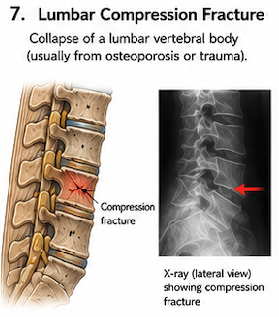
A vertebral compression fracture (VCF) occurs when one of the bones in the spine (vertebra) collapses, usually due to excessive pressure. The front of the vertebra typically cracks and loses height, while the back remains stable. Compression fractures most commonly occur in the thoracic (mid-back) and lumbar (lower back) regions of the spine.
Causes and Risk Factors
The most common cause of compression fractures is osteoporosis, a condition that weakens bones and makes them more susceptible to fractures. In severe osteoporosis, even simple activities like bending, coughing, or sneezing can cause a fracture. Other causes include trauma from falls or accidents, cancer that has spread to the spine (metastatic disease), and infections that weaken the vertebrae.
Complications of Untreated Fractures
Left untreated, compression fractures can lead to chronic pain, progressive loss of height, kyphosis (forward curvature of the spine), reduced lung capacity, difficulty with daily activities, and an increased risk of additional fractures. Early diagnosis and treatment are essential to prevent these complications and restore quality of life.
Common Symptoms
- Sudden onset of back pain
- Pain that worsens with standing or walking
- Limited spinal mobility
- Loss of height over time
- Stooped or hunched posture (kyphosis)
Treatment Options
- Pain management and bracing
- Kyphoplasty (balloon-assisted cement injection)
- Vertebroplasty (cement injection)
- Physical therapy and fall prevention
- Osteoporosis treatment to prevent future fractures
Take your next step with clarity.
Request an evaluation of your condition and options. Our team will contact you to discuss your request and arrange the next step.
Your request does not confirm an appointment.
Review your compression fracture care options.
Request an evaluation to review your symptoms, imaging, goals and prior treatment history.
The team will contact you to discuss your request. No outcome is guaranteed.