
Disc changes on your scan?
Review your options.
Disc degeneration describes changes in spinal discs over time. Review your symptoms, examination and imaging to understand which care options fit your situation.
Request a Disc Evaluation (Form)Telehealth or in person. Your request does not confirm an appointment.
A careful review before a surgical decision.
Your scan is part of the evaluation. Your symptoms, examination and prior treatment help guide a discussion of nonsurgical care or a procedure when appropriate, rather than making a decision from imaging alone.
Bring your imaging
Bring available spine imaging, reports and details of your symptoms and previous care.
Discuss the alternatives
Review previous care, nonsurgical options, expected benefits, limitations and risks.
Choose the appropriate next step
Surgery is discussed when symptoms, examination and imaging support it. No outcome is guaranteed.

Experience & careful judgment
Meet Dr. Cornacchia.
Louis G. Cornacchia III, M.D., FAANS, FACS
A board-certified neurosurgeon with 30 years of spinal cord stimulation experience.
More about Dr. Cornacchia’s experience and SCS device decisions
Spinal cord stimulation experience
Experienced neurosurgical judgment before device decisions.
A spinal cord stimulator is a medical device decision, but it is also a diagnosis decision. Apteum’s evaluation is designed to clarify whether SCS is reasonable, whether another spine problem needs attention, and what goals should define success for you.
He works with a community of experienced pain-management doctors and with Medtronic, Boston Scientific, and other manufacturers.
Manufacturer relationships do not imply endorsement of a specific device for every patient. Brand and system selection should be based on clinical need, anatomy, MRI considerations, programming goals, prior device history, and shared decision-making.

 Additional systems as clinically appropriate
Your evaluation focuses on listening, reviewing your imaging and explaining your options clearly. Surgery is considered when it is appropriate for your case.
Your evaluation focuses on your diagnosis, prior care and goals. Discuss the expected benefits, limitations, risks and alternatives before choosing your next step. An evaluation is not a commitment to surgery or an implant.
Read Dr. Cornacchia’s training and experience →How spinal cord stimulation works
Watch this explanation created by Dr. Cornacchia. Spinal cord stimulation is one option for selected patients after evaluation; it is not appropriate for every cause of pain and does not replace the discussion of the treatment on this page.
Full disc degeneration information and treatment options
Degenerative Disc Disease
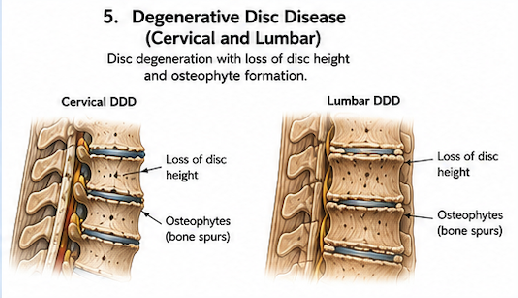
Degenerative disc disease is a natural part of aging, but it doesn’t have to define your quality of life. Apteum Spine offers advanced treatment options to manage symptoms and restore function.
Your request does not confirm an appointment.
Understand your condition. Know your options.
The first step is understanding what is causing your symptoms. We review your history, imaging, and previous treatment so you can understand which options deserve consideration.
- Listen
Your history, symptoms, and goals.
- Review
Your imaging and previous treatment.
- Explain
Your options and the next steps.
Information for your evaluation
What Is Degenerative Disc Disease?
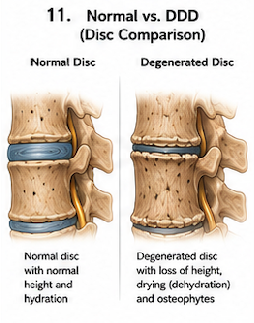
Despite its name, degenerative disc disease is not actually a disease — it’s a condition in which the intervertebral discs naturally deteriorate over time. These discs act as shock absorbers between the vertebrae, and as they wear down, they lose their cushioning ability. This can lead to pain, instability, and other symptoms that can significantly affect your daily life.
What Causes Disc Degeneration?
As we age, the discs in our spine gradually lose their water content, making them less flexible and more prone to damage. Daily activities and sports that put stress on the spine can cause tears in the outer core of the disc. Injuries that cause swelling, soreness, and instability can also accelerate disc degeneration. Smoking, obesity, and heavy physical work are additional risk factors.
Living with Degenerative Disc Disease
While degenerative disc disease cannot be reversed, it can be effectively managed. Many patients find relief through a combination of physical therapy, lifestyle modifications, and pain management techniques. Staying active, maintaining a healthy weight, and using proper body mechanics can help slow the progression and manage symptoms.
Common Symptoms
- Chronic pain in the lower back or neck
- Pain that worsens when sitting, bending, or twisting
- Pain that improves when walking or changing positions
- Periods of severe pain that come and go
- Numbness or tingling in the extremities
Treatment Options
- Physical therapy and core strengthening
- Anti-inflammatory medications
- Spinal injections for pain relief
- Minimally invasive discectomy
- Spinal fusion surgery
Take your next step with clarity.
Request an evaluation of your condition and options. Our team will contact you to discuss your request and arrange the next step.
Your request does not confirm an appointment.
Understand your disc changes and next step.
Request an evaluation to review your symptoms, imaging, goals and prior treatment history.
The team will contact you to discuss your request. No outcome is guaranteed.