

FAILED BACK
SYNDROME
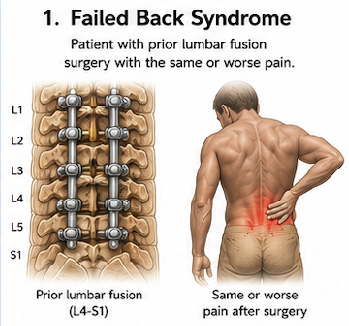
Failed back surgery syndrome – also known as failed back syndrome (FBS), refers to the pain that persists in the back and or the lower extremities after spinal surgeries.
Our e-book is providing you with basic knowledge and other information you should know about failed back syndrome.
Let’s Take This To Your Inbox
What Are Possible Treatment Options For Failed Back Syndrome?
Before seeking medical treatment, it is good to understand and define the types of back pain so as to find the right treatment and ways to control and improve our condition.
Apteum Spine offers a wide variety of treatment options for patients with Failed Back Syndrome.
How Do I Seek Treatment For Failed Back Syndrome?
You’ll be offered a tailored treatment approach drawn from the full range of treatment options, including medication, physical therapy, and interventional pain management or surgery.
We make sure to find the root cause of your pain before any treatment path is given. Take the first step with a complimentary consultation.
What Is Failed Back Surgery Syndrome?
Failed back surgery syndrome (FBSS) describes continued or new pain following a spinal operation. If you are still in pain after spine surgery — or worse than before — you are not out of options. At Apteum Spine, Dr. Louis G. Cornacchia III focuses on these complex cases, starting with a clear answer to one question: why didn’t the first surgery deliver the relief you expected?
Why Surgery Sometimes Fails
• Incomplete decompression of the affected nerve
• Recurrent disc herniation
• Adjacent segment degeneration (problems next to a previous fusion)
• Hardware-related issues or a non-healing fusion
• An inaccurate original diagnosis
Treatment Options
We review your full surgical history and imaging, perform a careful neurological exam, and order new imaging as needed to identify the true source of your ongoing pain before making any recommendations.
Treatment Options
Depending on the cause, options range from targeted non-surgical care and injections to minimally invasive revision procedures or corrective surgery. Further surgery is recommended only when there is a clear, correctable problem and a realistic expectation of benefit.
Frequently Asked Questions
Can the problem still be fixed?
Often — when there is a specific, identifiable cause. A careful re-evaluation determines whether further treatment is likely to help.
Is it too late to get a second opinion?
It is rarely too late to be re-evaluated and understand your options.
Medically reviewed by Louis G. Cornacchia III, M.D., FAANS, FACS — board-certified neurosurgeon. Last updated: June 2026. This page is for general education and is not a substitute for medical advice. For urgent symptoms, call (201) 267-2460 or go to the nearest emergency room.