

Pain when you move?
Understand spinal stability.
Spinal instability involves excessive or abnormal movement between vertebrae. Review your symptoms, imaging and previous care before deciding on treatment.
Request an Evaluation (Form)Telehealth or in person. Your request does not confirm an appointment.
A careful review before a surgical decision.
Your evaluation reviews symptoms, examination and imaging to understand spinal movement and alignment. Nonsurgical care and stabilizing treatment are discussed according to your diagnosis and goals.
Bring your imaging
Bring available spine imaging, flexion-extension X-rays if available, reports and prior operative records.
Discuss the alternatives
Review previous care, nonsurgical options, expected benefits, limitations and risks.
Choose the appropriate next step
Surgery is discussed when symptoms, examination and imaging support it. No outcome is guaranteed.

Experience & careful judgment
Meet Dr. Cornacchia.
Louis G. Cornacchia III, M.D., FAANS, FACS
A board-certified neurosurgeon with 30 years of spinal cord stimulation experience.
More about Dr. Cornacchia’s experience and SCS device decisions
Spinal cord stimulation experience
Experienced neurosurgical judgment before device decisions.
A spinal cord stimulator is a medical device decision, but it is also a diagnosis decision. Apteum’s evaluation is designed to clarify whether SCS is reasonable, whether another spine problem needs attention, and what goals should define success for you.
He works with a community of experienced pain-management doctors and with Medtronic, Boston Scientific, and other manufacturers.
Manufacturer relationships do not imply endorsement of a specific device for every patient. Brand and system selection should be based on clinical need, anatomy, MRI considerations, programming goals, prior device history, and shared decision-making.

 Additional systems as clinically appropriate
Your evaluation focuses on listening, reviewing your imaging and explaining your options clearly. Surgery is considered when it is appropriate for your case.
Your evaluation focuses on your diagnosis, prior care and goals. Discuss the expected benefits, limitations, risks and alternatives before choosing your next step. An evaluation is not a commitment to surgery or an implant.
Read Dr. Cornacchia’s training and experience →How spinal cord stimulation works
Watch this explanation created by Dr. Cornacchia. Spinal cord stimulation is one option for selected patients after evaluation; it is not appropriate for every cause of pain and does not replace the discussion of the treatment on this page.
Full spinal instability information, treatment and FAQs
Spinal Instability
Spinal instability means your spine cannot maintain its normal alignment under physiological loads. Apteum Spine specializes in diagnosing and treating spinal instability using the latest surgical and non-surgical techniques.
Your request does not confirm an appointment.
Understand your condition. Know your options.
The first step is understanding what is causing your symptoms. We review your history, imaging, and previous treatment so you can understand which options deserve consideration.
- Listen
Your history, symptoms, and goals.
- Review
Your imaging and previous treatment.
- Explain
Your options and the next steps.
Information for your evaluation
What Is Spinal Instability?
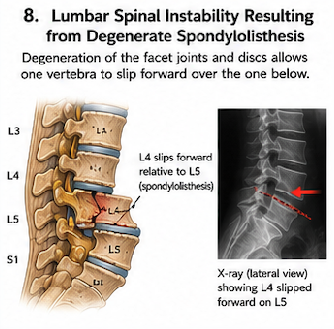
Spinal instability refers to a loss of the spine’s ability to maintain its normal pattern of movement and alignment under normal physiological loads. When the spine is unstable, there may be excessive or abnormal movement between vertebrae, which can lead to pain, progressive deformity, and potential neurological compromise. It can affect any region of the spine.
Causes of Spinal Instability
Spinal instability can result from degenerative changes (worn discs and facet joints), trauma or fractures, tumors that weaken the vertebral structure, infections, previous spinal surgery, inflammatory conditions like rheumatoid arthritis, and congenital abnormalities. Degenerative instability is the most common form, particularly in the lumbar spine.
Surgical Stabilization
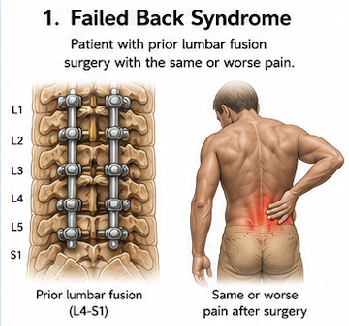
When conservative treatment fails to adequately address spinal instability, surgical stabilization may be recommended. This typically involves spinal fusion, where two or more vertebrae are permanently joined together using bone grafts and hardware (screws and rods). Apteum Spine utilizes robotic-assisted techniques to achieve optimal screw placement and fusion success rates.
Common Symptoms
- Pain that worsens with movement or activity
- Feeling of the spine ‘giving way’
- Muscle spasms in the back
- Progressive deformity of the spine
- Neurological symptoms including weakness or numbness
Treatment Options
- Physical therapy and core stabilization
- Bracing for support
- Pain management and injections
- Minimally invasive spinal fusion
- Robotic-assisted stabilization surgery
What Is Spinal Instability?
Spinal instability means the vertebrae move more than they should, often causing pain, nerve irritation, and a feeling that the back may “give way.” It can result from degeneration, a slipped vertebra (spondylolisthesis), prior surgery, or injury. At Apteum Spine, we carefully confirm true instability before recommending stabilizing treatment.
Symptoms
• Back or neck pain that worsens with movement or standing
• A sensation of catching, locking, or “giving way”
• Pain relieved by rest or bracing
• Hardware-related issues or a non-healing fusion
•Radiating pain, numbness, or weakness if nerves are involved
Causes
Degenerative changes, spondylolisthesis, fractures, prior surgery, or congenital factors. Accurate diagnosis often requires flexion-extension X-rays in addition to MRI or CT.
Treatment Options
• Physical therapy and core strengthening
• Activity modification and bracing in select cases
• Minimally invasive stabilization or fusion when instability is confirmed and symptoms persist
Frequently Asked Questions
Does instability always require surgery?
No. Many cases are managed conservatively; surgery is considered when instability is confirmed and causing persistent symptoms.
How is instability diagnosed?
Often with dynamic (flexion-extension) X-rays alongside MRI or CT to see how the spine moves.
Medically reviewed by Louis G. Cornacchia III, M.D., FAANS, FACS — board-certified neurosurgeon. Last updated: June 2026. This page is for general education and is not a substitute for medical advice. For urgent symptoms, call (609) 831-0998 or go to the nearest emergency room.
Take your next step with clarity.
Request an evaluation of your condition and options. Our team will contact you to discuss your request and arrange the next step.
Your request does not confirm an appointment.
Review your spinal stability and treatment options.
Request an evaluation to review your symptoms, imaging, goals and prior treatment history.
The team will contact you to discuss your request. No outcome is guaranteed.