

Herniated Disc
A herniated disc — also called a slipped or ruptured disc — is one of the most common causes of back and neck pain. At Apteum Spine, we offer personalized treatment plans ranging from conservative care to minimally invasive robotic surgery.
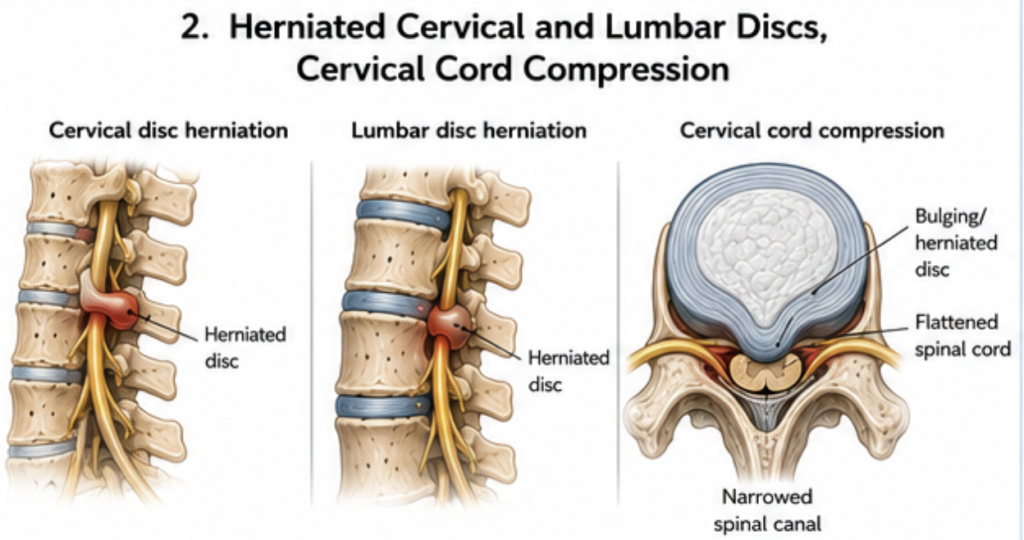
What Is a Herniated Disc?
A herniated disc occurs when the nucleus pulposus — the soft, gel-like center of an intervertebral disc — pushes through a tear in the annulus fibrosus, the tough outer layer. This can happen in any part of the spine but is most common in the lumbar (lower back) and cervical (neck) regions. The displaced disc material can press on spinal nerves, causing pain, numbness, or weakness in the arms or legs.
What Causes a Herniated Disc?
Disc herniation is often the result of gradual, age-related wear and tear called disc degeneration. As you age, your discs become less flexible and more prone to tearing or rupturing with even a minor strain or twist. Risk factors include heavy lifting with improper form, being overweight, repetitive motions that stress the spine, and a sedentary lifestyle. Genetics can also play a role in disc degeneration.
How Is a Herniated Disc Diagnosed?
Diagnosis typically begins with a physical examination and review of your medical history. Your doctor may test your reflexes, muscle strength, walking ability, and sensitivity to touch. Imaging tests such as MRI, CT scan, or X-rays may be ordered to confirm the diagnosis and determine the exact location and severity of the herniation.
Ready to Get Help?
Take the first step toward relief with a personalized consultation.
What Is a Herniated Disc?
A herniated disc happens when the soft center of a spinal disc pushes through its tougher outer wall, often pressing on nearby nerves. It is one of the most common causes of back, neck, and radiating limb pain — and one of the most over-treated. At Apteum Spine, we confirm the diagnosis carefully and pursue the least invasive effective treatment first.
Symptoms
• Pain in the back or neck, often radiating into an arm or leg
• Numbness, tingling, or “pins and needles” along a nerve path
• Muscle weakness in the affected limb
• Pain that worsens with certain movements, coughing, or sitting
Treatment Options
• Activity modification, physical therapy, and anti-inflammatory medication
• Epidural steroid injections for nerve inflammation
• Minimally invasive microdiscectomy when conservative care fails or there is progressive weakness
• Disc replacement or fusion only in select cases
When to Seek Care
See a specialist for pain that persists beyond a few weeks, radiates down a limb, or comes with weakness. Seek emergency care for sudden severe weakness or loss of bladder or bowel control.
Causes & Risk Factors
Discs weaken naturally with age, making herniation more likely. Lifting with poor mechanics, repetitive strain, sudden injury, excess weight, and smoking all raise the risk.
Diagnosis
Diagnosis combines your symptom history, a physical and neurological exam, and imaging — typically MRI — to confirm which disc and nerve are involved before any treatment decision.
Frequently Asked Questions
Can a herniated disc heal on its own?
Many improve over weeks to months as inflammation subsides and the body reabsorbs part of the disc material.
Is surgery always needed?
No — most herniated discs are managed without surgery. Surgery is reserved for cases with persistent symptoms or nerve compression that hasn’t responded to conservative care.
Medically reviewed by Louis G. Cornacchia III, M.D., FAANS, FACS — board-certified neurosurgeon. Last updated: June 2026. This page is for general education and is not a substitute for medical advice. For urgent symptoms, call (609) 831-0998 or go to the nearest emergency room.