

Radiculopathy
Radiculopathy — commonly known as a pinched nerve — can cause significant pain and functional limitations. Apteum Spine specializes in identifying the precise location of nerve compression and providing targeted treatment.
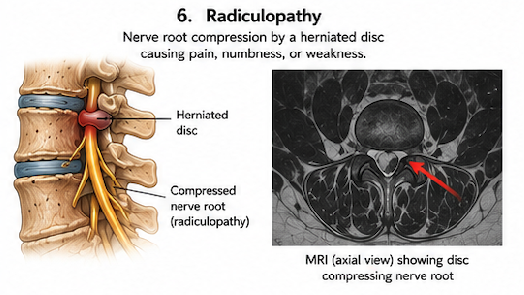
What Is Radiculopathy?
Radiculopathy is a condition caused by compression, inflammation, or injury to a spinal nerve root. The compressed nerve can cause pain, numbness, tingling, or weakness along the path of the nerve. Depending on which nerve is affected, symptoms can occur in the neck, upper back, lower back, arms, or legs. The three main types are cervical radiculopathy (neck), thoracic radiculopathy (mid-back), and lumbar radiculopathy (lower back).
Causes of Radiculopathy
The most common causes of radiculopathy include herniated discs, bone spurs from arthritis, spinal stenosis, degenerative disc disease, and spondylolisthesis. Less common causes include spinal infections, tumors, diabetes-related nerve damage, and scar tissue from previous spinal surgery. Risk factors include age, repetitive spinal motions, and obesity.
Diagnosis and Evaluation
Diagnosing radiculopathy typically involves a thorough physical examination, including tests for reflexes, muscle strength, and sensation. Imaging studies, such as MRI or CT scans, can reveal the source of nerve compression. Electromyography (EMG) and nerve conduction studies may be used to assess nerve function and pinpoint the exact location of the problem.
Ready to Get Help?
Take the first step toward relief with a personalized consultation.
What Is a Pinched Nerve (Radiculopathy)?
A pinched nerve — known medically as radiculopathy — occurs when a spinal nerve root is compressed or irritated, usually by a herniated disc, bone spur, or narrowing of the space the nerve passes through. The result is pain, numbness, tingling, or weakness that often travels along the path of that nerve into an arm or leg. At Apteum Spine, Dr. Louis G. Cornacchia III focuses on identifying exactly which nerve is affected, which is the key to effective treatment.
[IMAGE: Pinched nerve / radiculopathy diagram — alt: “Diagram of a pinched nerve (radiculopathy): a herniated disc compressing a lumbar nerve root, with axial MRI.”]
Symptoms
• Sharp, burning, or electric pain radiating into an arm or leg
• Numbness or tingling along the nerve path
• Muscle weakness in the affected limb
•Pain that worsens with certain positions or movements
Common Causes
Most pinched nerves are caused by a herniated disc or by degenerative changes (bone spurs, thickened ligaments, or narrowing/stenosis) that reduce the space around the nerve root.
Where It Happens
Cervical radiculopathy affects nerves in the neck and causes symptoms in the shoulder, arm, or hand. Lumbar radiculopathy affects nerves in the lower back and causes symptoms down the buttock and leg — commonly experienced as sciatica.
Diagnosis
A history and neurological exam, with imaging (MRI most often) to confirm which nerve root is compressed and why, before any treatment decision.
Treatment Options
• Physical therapy and activity modification
• Anti-inflammatory medication
• Epidural steroid injections or selective nerve root blocks
• Minimally invasive decompression or microdiscectomy when conservative care fails or there is progressive weakness
When to Seek Care
See a specialist for pain that radiates into a limb, persistent numbness, or weakness. Seek emergency care for sudden severe weakness or loss of bladder or bowel control.
Frequently Asked Questions
Is a pinched nerve the same as radiculopathy?
Yes — “pinched nerve” is the everyday term for radiculopathy, which means irritation or compression of a spinal nerve root.
Will a pinched nerve heal on its own?
Many improve over weeks with conservative care as inflammation subsides. Persistent or worsening symptoms should be evaluated.
Medically reviewed by Louis G. Cornacchia III, M.D., FAANS, FACS — board-certified neurosurgeon. Last updated: June 2026. This page is for general education and is not a substitute for medical advice. For urgent symptoms, call (609) 831-0998 or go to the nearest emergency room.